



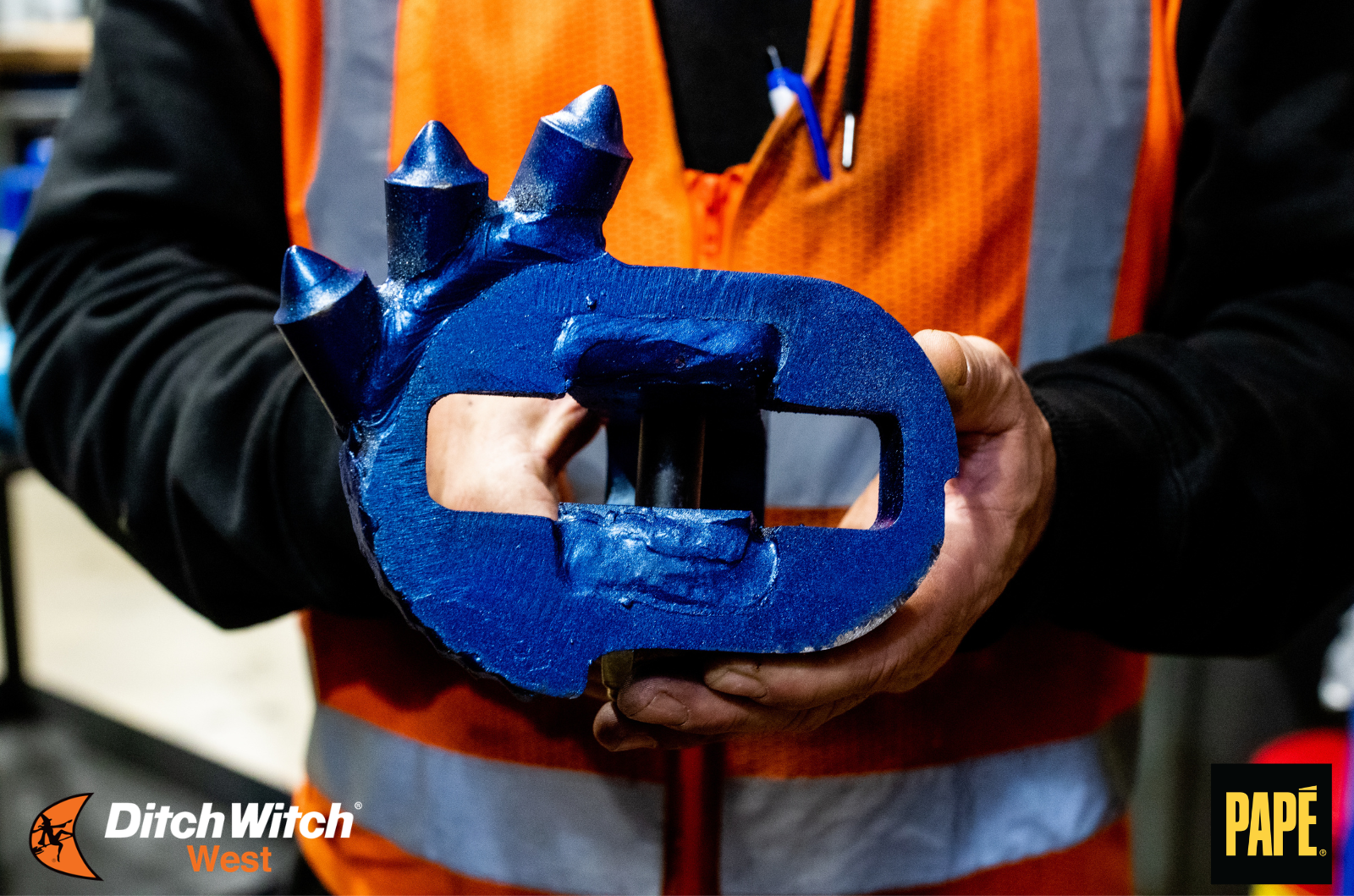
A directional drill can provide plenty of power, but the tooling at the end of the drill string meets the ground first. Bits, housings, reamers, subs, and connection components absorb the abrasion, torque, vibration, and repeated loading that come with horizontal directional drilling. Selecting the right pieces can improve penetration, support steering, reduce wear, and help crews stay productive.
Radius HDD gives contractors a range of downhole tooling for Ditch Witch equipment. Understanding where the key components fit can make it easier to build a setup around the rig, bore plan, and ground conditions.
Why HDD Tooling Selection Matters
Every bore combines soil, rock, diameter, product size, machine configuration, and connection requirements. Those variables affect how the cutting tool performs and how the drill string handles the load. Before mobilizing, crews should consider:
- Soil composition and expected changes along the bore path
- Rock, cobble, or abrasive material
- Pilot bore and final bore diameter
- Drill rig and drill-string configuration
- Product size and pullback requirements
- Required adapters, subs, and connections
Radius tooling gives contractors with mixed fleets more flexibility. At Ditch Witch West, our HDD specialists can help match tooling to the rig, soil conditions, and project requirements.
Radius Drill Bits and Blades: Start at the Cutting Face
The pilot bore begins when the tool first makes contact with the ground, so bit and blade selection deserves careful attention. A cutting tool suited to the formation can support productive penetration, consistent steering, and controlled wear.
Softer soils may call for a different cutting profile than compacted ground, cobble, abrasive material, or tougher formations. Radius offers bits and blades built for aggressive cutting and durable performance across varied ground conditions.
Crews can also track wear patterns, penetration rates, steering response, and tool life to guide future selections.
Sonde Housings: Protect the Electronics Guiding the Bore
Locating electronics give the crew critical information about the downhole tool and its path. The sonde housing protects those electronics while allowing the guidance system to do its job.
Radius sonde housings are designed to protect HDD electronics while maintaining precise tracking capability. Housing selection should account for compatibility and underground conditions. Routine inspection matters because impact, abrasion, and repeated use can damage the housing over time.
Back Reamers: Prepare the Bore for Pullback
After the pilot bore is complete, the reamer enlarges the hole to the diameter needed for product installation. Ground conditions, final bore size, drilling fluid flow, bore stability, and product diameter all influence reamer selection.
Radius back reamers are designed for efficient hole enlargement with flow and stability in mind. Choosing the reamer during bore planning gives the crew time to account for soil behavior, fluid needs, and the material that must be removed. A well-matched reamer can support a smoother pullback.
Radius Rock Tools for Difficult Ground
Hard rock and challenging geology place higher demands on downhole tooling. Radius offers specialized rock tools for these applications, giving crews options for demanding formations.
Preparation starts with understanding the expected geology. Review available site information, choose tooling before mobilization, and carry appropriate backup components when conditions may change. This can reduce repeated tool changes and help crews respond efficiently to fractured rock or other difficult material.
Pay Attention to the Connections
Some of the most important HDD parts sit between the drill rig and the cutting tool. Connections transfer torque, protect higher-value components, and help different parts of the drill string work together.
Key Radius options include:
- Drive Chucks and Sub Savers: Connect the rig to the drill string and help reduce wear at critical connection points.
- Starter Rods, Adapters, and Subs: Help create compatible connections between tooling systems, especially useful for mixed fleets or specialized setups.
- Swivels and Quick Connects: Support efficient tooling changes and pullback operations.
For connection needs outside a standard configuration, the Radius Custom Sub Builder gives customers another way to create the right interface for a specific tooling setup.
Replace Wear Items Before They Cost Production Time
HDD tooling works in an abrasive environment, so inspection should be part of the normal jobsite routine. Before the next bore, look for:
- Excessive cutting-edge wear
- Damaged threads or connections
- Cracks or deformation
- Loose components
- Unusual wear patterns
Get Radius HDD Parts Through Ditch Witch West
At Ditch Witch West, we are the exclusive Radius HDD dealer across the West. Our teams can help contractors source cutting tools, housings, reamers, rock tools, chucks, sub savers, adapters, starter rods, swivels, quick connects, and custom connection options.
Productive HDD work starts with a tooling package that fits the rig, geology, and bore requirements. Review your cutting tools, housings, reamers, connections, and wear items before the next project begins.
Contact your local Ditch Witch West team to explore Radius HDD tooling, request parts, or talk with an HDD specialist about the setup for your next bore.