



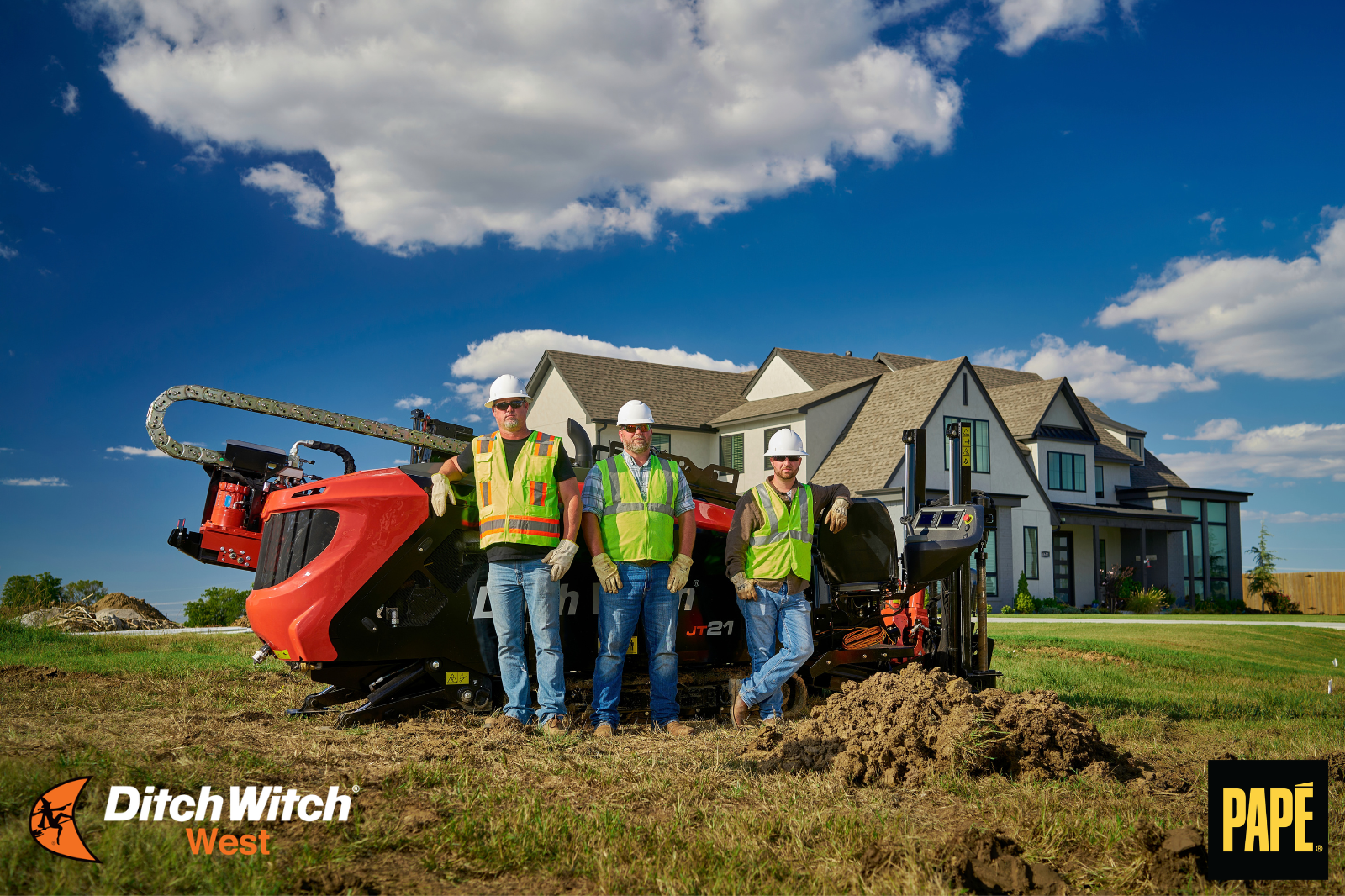
A directional drill may be the centerpiece of an underground construction project, but plenty of other work has to happen to keep that drill productive.
Crews still need to expose utilities, manage drilling fluid, remove slurry, move pipe and tooling, complete shorter trench runs, and restore the site when installation is finished. When any of those tasks fall behind, operators can end up waiting on the rest of the jobsite.
The right support equipment helps keep that work moving. A well-planned fleet can reduce manual labor, make cleanup easier, and give crews more options as conditions change throughout the day.
Think About the Whole Underground Workflow
Productivity depends on more than how quickly the drill advances. Before the bore starts, crews may need to pothole utilities, prepare entry and exit areas, and stage tooling and materials. During drilling, fluid needs to stay mixed and available while spoils and slurry are managed. Once installation is complete, there is still backfilling, grading, cleanup, and restoration to do.
The goal is to give each part of the operation the equipment it needs so one task does not hold up the next. For many underground crews, that means combining a directional drill with vacuum equipment, trenchers, compact utility machines, fluid management systems, and trailers that fit the type of work they regularly perform.
Mud Vacs Help Keep Slurry Under Control
Drilling fluid management can quickly affect the pace of an HDD project. As slurry collects around entry and exit points, crews need a way to remove it and keep the area manageable.
Mud vacs give crews a dedicated solution for collecting drilling mud, slurry, and liquid waste throughout the job. That can make cleanup more efficient and help keep work areas organized as the bore progresses.
Capacity matters, but so do access, transport, and the expected volume of material. The MV8 Mud Vac offers an 800-gallon debris tank in a compact package, while the MV12 Mud Vac increases debris capacity to 1,200 gallons for jobs that generate more material.
Choosing between them comes down to how the machine will actually be used. A larger tank can extend the time between dumping, while a more compact unit may be easier to position on crowded jobsites.
Trenchers Give Crews Another Installation Option
Trenchless construction still includes plenty of situations where open-cut installation makes sense.
Short service connections, irrigation lines, fiber drops, and work near entry or exit pits may be completed more efficiently with a dedicated trencher. Having that option available allows crews to choose the installation method that best fits each part of the project.
The right machine depends on factors such as soil, trench depth, access, and expected production. Common options include:
- Walk-behind trenchers for compact jobsites and shorter utility work
- Ride-on trenchers for longer runs and higher-production applications
- Microtrenchers for narrow installations such as fiber
- Vibratory plows for applications suited to direct burial
Mini Skid Steers Can Stay Busy All Day
A mini skid steer can fill several roles during the same project, which makes it especially useful on jobsites where space and transport capacity are limited.
Before drilling starts, it can help prepare work areas and move supplies. During installation, crews can use it to transport spoils, pipe, conduit, pallets, and tooling. Later, the same machine can assist with backfilling, grading, and cleanup.
Attachments add even more flexibility. Depending on the work, operators can equip a mini skid steer with buckets, forks, augers, levelers, trenchers, rakes, tillers, and other tools.
Keep Fluid, Equipment, and Materials Ready
Some of the most important support equipment spends very little time in the spotlight. Fluid management systems help crews mix and supply drilling fluid throughout HDD operations. Properly sized systems can help maintain a steady workflow as drilling conditions and fluid requirements change.
Trailers are just as important to daily logistics. Utility construction trailers can transport equipment, pipe, conduit, reels, and other materials between jobsites. Keeping those items organized and accessible helps crews spend more time working than tracking down supplies.
Build Your Support Fleet Around Lost Time
One of the best ways to evaluate support equipment is to look at where your crews regularly lose time. Ask a few practical questions:
- Which tasks routinely slow down the main installation equipment?
- Where is the crew relying heavily on manual labor?
- Could one versatile machine handle several recurring jobs?
- What equipment fits the access conditions we encounter most often?
- How will additional equipment affect transportation and staging?
Keep the Whole Jobsite Moving
A productive HDD crew needs more than a capable directional drill. Mud vacs keep slurry under control, trenchers handle open-cut sections, mini skid steers support material handling and restoration, and fluid systems and trailers keep crews supplied.
At Ditch Witch West, we can help you put together an equipment lineup based on the work your crews actually perform. Connect with your local Ditch Witch West team to discuss equipment, parts, and service support for your underground operation.