



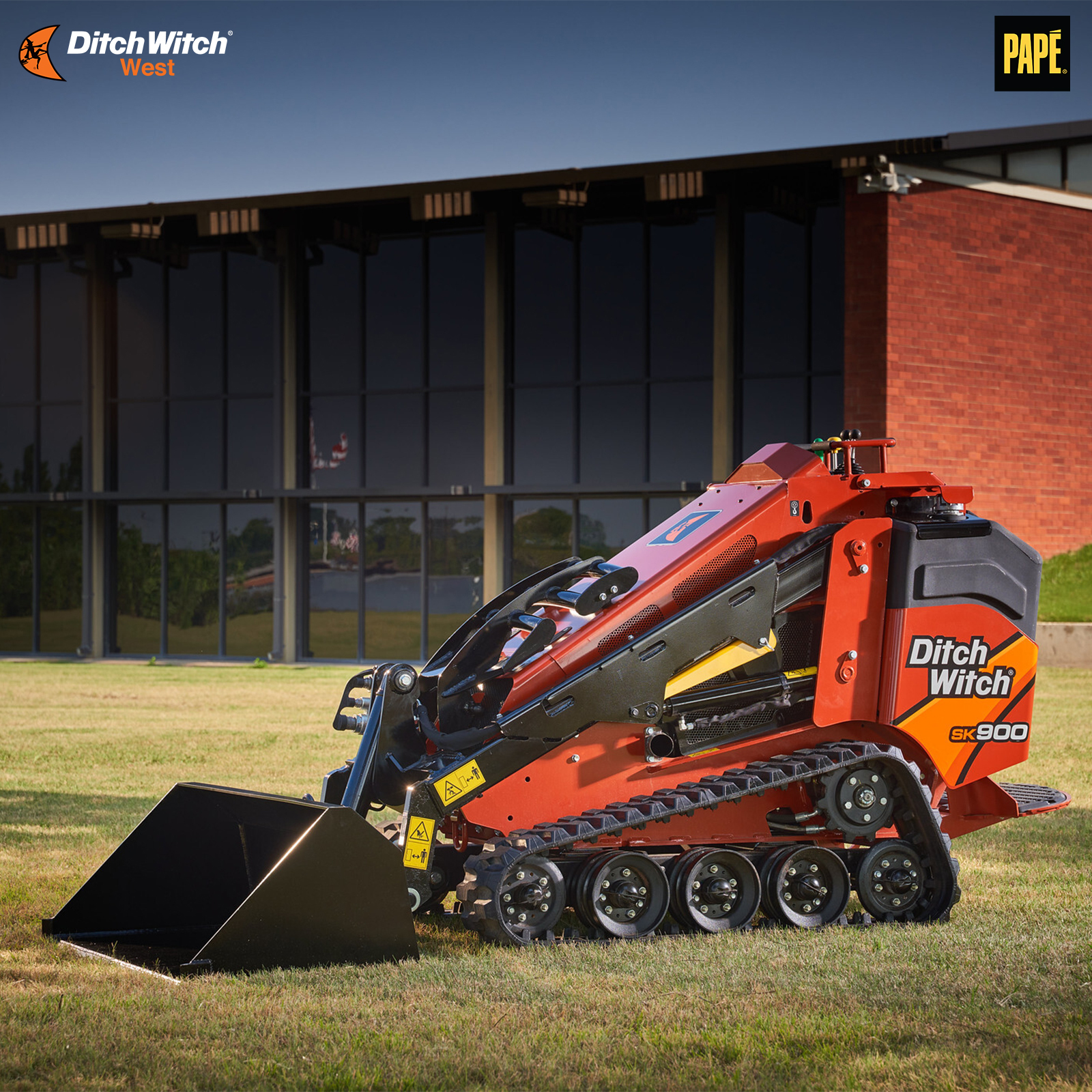
Spring jobsites can change fast. One stretch of rain can turn a routine day of moving material, trench prep, grading, or cleanup into a slower, messier operation. Crews deal with slick surfaces, soft ground, uneven terrain, and tighter access points that make larger equipment harder to use efficiently. That’s where mini skid steers earn their place. In muddy conditions, the right stand-on machine gives operators a practical balance of traction, control, compact size, and attachment flexibility.
Why Mini Skid Steers Make Sense During Mud Season
Mud season usually creates two challenges at the same time: unstable ground and less room to maneuver. Larger machines can become harder to manage when access is limited, and on softer ground, added size and weight don’t always help. In many cases, they make the job harder.
Mini skid steers solve that problem by delivering real jobsite capability in a smaller, more nimble footprint. That matters during spring work, when crews may need to move through gates, navigate backyards, work around saturated areas, or operate in spaces where larger equipment is simply inefficient. That compact size also helps when it’s time to load, unload, and move between jobs. In a season where changing weather can force quick schedule shifts, easier transport is a real advantage.
Stand-on operation adds another benefit. In muddy or uneven conditions, visibility and control become even more important than usual. Being able to step on, keep a close eye on the attachment, and make precise adjustments gives operators more confidence when grading, moving material, or cleaning up wet debris.
What to Look for in a Mud Season Mini Skid Steer
Not every spring jobsite needs the same machine. Still, there are a few features that become especially important when the ground is wet and the workload is not slowing down.
Compact Dimensions
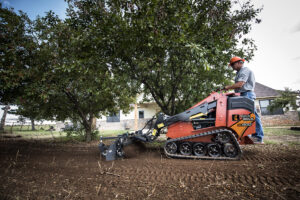
When access is limited and soil conditions are soft, size matters right away.
The SK800 stands out here because it can be configured as narrow as 36 inches with 7-inch tracks. That can make a real difference for crews working through standard gates or in side-yard and backyard access areas where space is limited but work is still demanding.
Usable Lifting and Carrying Power
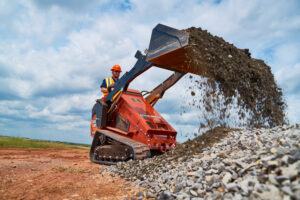
Wet conditions do not reduce the amount of work that needs to get done. Crews still have to move soil, gravel, debris, tools, and other materials efficiently.
The SK800 combines its compact design with a 24.8 hp engine and an 860 lb rated operating capacity, which makes it a strong option for smaller but still serious work. At the other end of the range, the SK1750 brings a 43.5 hp engine and 2,000 lb lifting capacity for jobs that call for greater production and heavier daily use.
Strong Attachment Performance
Spring jobs rarely stay limited to one task for long. Cleanup in the morning can turn into grading by midday and material handling later in the afternoon.
That’s why attachment flexibility is such a major advantage. Buckets, forks, augers, trenchers, levelers, rake attachments, and tillers all expand what the machine can do without requiring a crew to bring in additional equipment.
Operator Comfort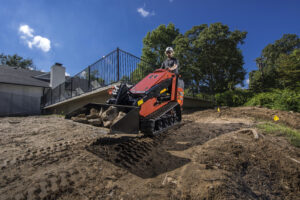
Mud season is challenging enough without asking the operator to fight the machine all day.
The SK1050 is a good example of how comfort supports productivity. Its large operator platform and spring-supported platform design help reduce fatigue over long workdays, especially when rough conditions and repetitive travel across uneven ground are part of the job.
The Kinds of Jobs Where Mini Skid Steers Shine
One of the biggest strengths of a mini skid steer is how well it matches the reality of spring work. Conditions change quickly, access is often less than ideal, and crews frequently need one machine that can handle several different tasks without slowing the job down. That makes mini skid steers especially useful for:
- Moving wet soil, gravel, mulch, and debris
- Storm cleanup and post-rain site cleanup
- Trench and drainage prep
- Landscape and hardscape support work
- Moving material in the backyard or narrow-access areas
- Utility and underground construction support
- Brush clearing and general property cleanup
Put simply, they are often the machine that keeps smaller crews productive when a larger unit is too much and manual labor is not enough.
Attachments Can Make the Difference
The machine matters, but the attachment setup does too. In wet conditions, the right attachment can help crews work cleaner, faster, and with less rework.
- Buckets are an obvious choice for moving wet material and handling cleanup.
- Augers support footing and post-hole work.
- Levelers help prepare surfaces more evenly.
- Rake and tiller attachments support with debris removal and soil prep as conditions begin to improve.
For many crews, the real value of a mini skid steer comes from being able to move from one task to the next with the same machine and the right attachment package.
Keep Spring Work Moving
Mud season doesn’t have to bring a jobsite to a standstill.
The right mini skid steer gives crews a practical way to keep working when access is tight, the ground is soft, and the weather refuses to cooperate. With the right mix of size, lifting capability, operator control, and attachment flexibility, a stand-on machine can do a lot to keep spring work productive.
If you’re comparing models for seasonal work, start with the type of access you have, the materials you move most often, and the attachments your crew depends on most. Once those needs are clear, it becomes much easier to match the machine to the work and head into mud season with the right setup.
If you’re planning for mud season and need help choosing the right mini skid steer or attachment setup, contact your local Ditch Witch West team to explore available models and support options.