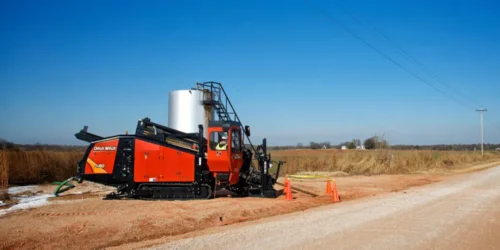





Before you break ground on your next trenching project, it’s crucial to ensure you’re taking all necessary steps to keep your operators safe. Avoid getting hurt on the job, disrupting existing utilities, and damaging your valuable equipment by taking the time to conduct pre-use equipment examinations and jobsite evaluations. A critical eye and care for your operators will help you keep your excavation jobs safe and efficient.
EQUIPMENT INSPECTION
You should conduct most of your safety checks before your trencher even touches the soil. First, you’ll want to examine the basics: your machine’s engine, hydraulics, belts, and tracks. After you’ve inspected these elements, use this helpful list to inspect your equipment in entirety.
-
- Make sure you have your Ditch Witch trencher owner’s manual present so you can investigate model-specific requirements and specifications.
-
- Refer to your relevant parts manual to ensure the guards, shields, and stow locks are in place and not damaged.
-
- Check your trencher for any leaks and loose or damaged hoses.
-
- Ensure all hardware and fasteners are tightened securely.
-
- Test that the ground drive is responsive to controls in both directions, and that, when disengaged, the ground drive stops in an adequate range.
-
- Make sure the steering is responsive in all directions.
Conducting a thorough exam of your trench digger will help you avoid any unnecessary injuries or equipment repair down the road. For a comprehensive checklist to take with you on your next trenching project, check out Ditch Witch’s official Trencher Safety Checklist.
What about trencher transport?
If you’re towing your trencher offsite, don’t forget to attach your trailer and tow vehicle securely when loading. Ensure the parking brake of the tow vehicle is set before loading, then lower the equipment throttle and load the equipment onto the tow vehicle. Once securely on the tow vehicle, make sure the equipment parking brake is set; reverse this order for offloading your equipment at your jobsite.
JOBSITE EVALUATION
After you’ve examined and offloaded your equipment, you can turn to your jobsite. It’s crucial to mark your proposed jobsite and call the national 811 number to ensure relevant utility lines are located and marked at least 48 hours before you break ground. Some towns, cities, and states have specific utility regulations, so investigate local regulations to see if you will need to speak with individual utility providers.
Once you’re approved for excavation and have arrived at the site, scan the area for any hazards; look out for curbs, slabs, fences, difficult landscaping, utility cables or wires, and any other object that could cause harm to you or your equipment. Remove any hazardous items that you can and set up a “danger zone.”
Defining Your “Danger Zone”
Your “danger zone” is the perimeter around your site, beyond which is safe for bystanders. In your trenching project, your zone should extend to 6 feet beyond the furthest reach of trencher attachments. That means bystanders should be at least 6 feet from the tip of a backhoe or other attachment during operation. If you’re planning to use a drilling attachment, extend your danger zone to 10 feet beyond the attachment reach point.
The strict enforcement of this zone – even when using a small trencher or walk-behind trencher – assures that bystanders and fellow contractors don’t trip and fall into your trench, get hit by debris thrown by your machinery, or any other multitude of potential safety hazards. Keep your bystanders safe by adhering to your danger zone without question.
ONSITE AWARENESS
Once you’ve made sure your equipment and surrounding environment are hazard-free, it’s time to get to work. While you’re on your machine, be on the lookout for low-hanging branches or wires, to avoid hitting your head or catching on debris. You should also make a note of where other contractors and bystanders are, to ensure they are outside of the danger zone.
Keep in mind the terrain of your project site. If you’re working on a sloped surface, make sure to operate your equipment directly up and down the slope, not across the hill; this will help prevent your equipment from tipping. If you’re using a walk-behind trencher, stay on the uphill side of your trench digger. Stay aware of any environmental changes or obstacles and stop operating your equipment if you sense danger to yourself or any bystanders.
By thoroughly inspecting your equipment (before and after reaching the job site), clearing your jobsite of potential hazards, setting a danger zone, and maintaining onsite awareness, you can keep yourself and your operators safe on your next excavation project. When in doubt, check your owner’s manual or visit one of our experts at your local Ditch Witch dealer.
Have a project coming up and looking for a trencher for sale or a trencher rental? Our team can help with that, too.